Home / Resource Center / Flooring / Tile
Flooring · 7 min readTile has been the backbone of Florida flooring for a hundred years, and there's a reason it isn't going anywhere: nothing else shrugs off our humidity, sand, sun, and the occasional storm like fired porcelain. But "tile" covers everything from $1 ceramic squares to $30 imported porcelain planks, and the install matters as much as the material. Here's how to choose well and what it really costs in Southwest Florida.
Tile doesn't absorb humidity, doesn't fade in sun, doesn't scratch under sandy paws, and doesn't care if the house sits closed up all summer while you're up north. When a tropical storm pushes water inside, a tiled home usually needs a mop — not a flooring replacement. It's also the coolest surface underfoot in August, which your feet (and your AC bill) will notice.
Porcelain is fired denser, absorbs less than 0.5% water, and wears its color through the body of the tile. It's the right choice for floors, wet areas, lanais, and anywhere that takes real traffic. Nearly all wood-look plank tile is porcelain.
Standard ceramic is softer and more absorbent — easier to cut, cheaper to buy, and perfectly good on walls, backsplashes, and light-traffic interior floors. Just don't put bargain ceramic on an open lanai or a busy family room and expect porcelain results.
Materials run from about $2/sq ft for builder ceramic to $8–$15+ for premium porcelain. Installed, most projects land between $7 and $15 per square foot all-in. Labor is the bigger share here — and it climbs with large-format tile (more leveling, fewer forgiving grout lines), diagonal or herringbone layouts, and demolition of old tile, which adds roughly $2–$4/sq ft on its own. Showers and niches are custom work, priced separately.
Worked example: a 1,600 sq ft home in mid-grade wood-look porcelain typically runs $12,000–$21,000 complete, depending on demo and layout.
Wood-look porcelain planks (6x36, 8x48) remain the most requested floor in Southwest Florida remodels — wood warmth, tile durability. Big 24x48 rectangles make small rooms feel larger but demand a very flat slab. For anywhere that gets wet — bathrooms, pool baths, lanais — check the slip rating: look for a wet DCOF of 0.42 or higher, and use textured or matte finishes rather than polished.
In our climate, grout is the part that ages — not the tile. Cement grout should be sealed after install and resealed every year or two, or it will darken and hold mildew in humid rooms. Epoxy grout costs more up front but never needs sealing and stays the color you picked. Either way, run the bath fan, and clean with pH-neutral cleaner — vinegar slowly eats cement grout.
The honest answer: many Southwest Florida homes should have both. Tile in the showers, baths, and lanai; luxury vinyl plank through the bedrooms and living areas where comfort and budget matter. Our Florida flooring overview compares every option in one place.
Porcelain, in almost every floor application. Its near-zero water absorption and denser body handle humidity, traffic, and lanais far better. Save ceramic for walls, backsplashes, and budget-friendly light-traffic rooms.
Most Southwest Florida projects run $7 to $15 per square foot installed, including mid-grade porcelain. Removing existing tile adds roughly $2 to $4 per square foot, and showers are priced as custom work.
Cement-based grout, yes — seal it after install and every year or two after, especially in humid bathrooms. Epoxy grout never needs sealing, which is why we often recommend it for showers despite the higher up-front cost.
It depends on the room. Wood-look porcelain wins on durability, sun, and wet areas; LVP wins on comfort, quiet, install speed, and cost. Many homes use tile in wet rooms and LVP everywhere else.
Keep planning with these:
We install tile across Fort Myers, Cape Coral, and the rest of Southwest Florida — floors, showers, and lanais — and the paint-grade finish work around it gets done right, because that's our trade too. Estimates are free and in writing: request an estimate whenever you're ready.
Floors in Southwest Florida live a hard life: 70%+ average humidity, sand tracked in year-round, and the occasional tropical-storm water intrusion. Some materials shrug all of that off; others swell, cup and delaminate. Here's the honest rundown.

Wood and wood-based products absorb moisture from the air and expand. In climates with dry winters, they get a chance to shrink back. Here, they don't — which is why solid hardwood is the riskiest common flooring in coastal Florida, especially in homes that sit closed up over summer.
Effectively waterproof, immune to humidity, and cool underfoot. The weak point is grout, which stains and grows mildew if left unsealed. Sealing grout every few years keeps tile floors looking new for decades.
The go-to wood look for Florida. Fully waterproof cores, no swelling, and modern lines are convincingly wood-grained. Choose a thicker wear layer (20 mil+) for pets and rentals. One caveat: extreme heat in unconditioned rooms can expand cheap LVP — buy quality and follow expansion-gap specs.
Cross-ply construction resists humidity movement far better than solid wood. If you want real wood in SWFL, engineered is the way — kept in a consistently air-conditioned home.
Beautiful, but it moves with every humidity swing. Expect seasonal gapping and cupping unless the home's climate is tightly controlled year-round.
For garages, lanais and modern interiors, sealed concrete is bulletproof. Epoxy and polyaspartic coatings turn a garage floor into a showroom surface that laughs at humidity, tires and spills — and they're a natural companion project to a repaint.
A worn garage floor or a slick painted lanai is often a coating problem, not a replacement problem. Polyaspartic systems cure fast, resist UV yellowing (epoxy's weakness in sunlit spaces), and can include anti-slip texture — worth asking about before you rip anything out.
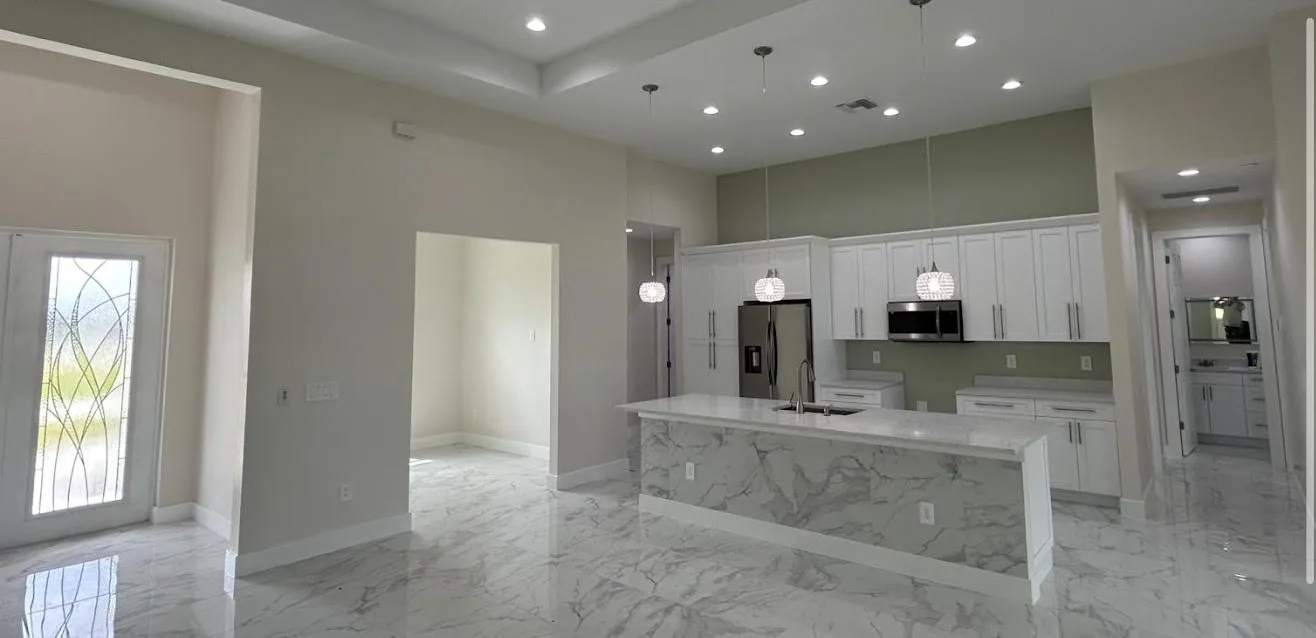
Porcelain tile, luxury vinyl plank and sealed or coated concrete handle Florida humidity best. Engineered hardwood works in consistently air-conditioned homes; solid hardwood is the riskiest choice.
Quality LVP with a rigid waterproof core performs very well. Cheap products in hot, unconditioned rooms can expand - follow the manufacturer's expansion gap and keep sun-baked rooms ventilated.
Polyaspartic resists UV yellowing and cures faster, making it better for garages and lanais that get sunlight. Epoxy remains a solid budget option for fully shaded floors.
You can, but expect seasonal movement like gapping and cupping unless humidity is tightly controlled year-round. Most flooring pros recommend engineered wood or LVP instead.
Planning the work? These guides from our Pricing Center cover the costs:
Free estimates. Fast responses. A finish you'll be proud of.
Get a Free Estimate Today